
Lecturers
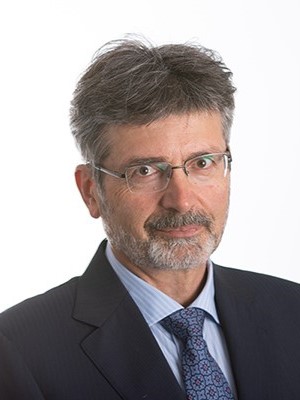
Djordje Peric
Swansea University, United Kingdom
Djordje Peric is a Professor of Civil Engineering at Swansea University, where he has
worked since 1992. He holds a Ph.D. in Civil Engineering from Swansea University, awarded in 1992. His research
focuses on computational mechanics, particularly in solid, structural, and fluid mechanics. He specializes in
computational modeling of material behavior, fluid-structure interaction, multiscale modeling, and adaptive
solution strategies for nonlinear problems.
Prof. Peric has made key contributions to the numerical treatment of elasto-plastic and elasto-viscoplastic problems, including finite strains and deformations. He has also advanced computational modeling of frictional contact and progressively damaging solids. His research on adaptive mesh refinement for elasto-plastic materials and iterative solution procedures for large-scale problems has had a significant impact on engineering simulations.
More recently, his work has concentrated on computational strategies for fluid-structure interaction and fluid flows with free surfaces and surface tension. He is also involved in multiscale modeling of materials and structures.
Prof. Peric has published extensively in peer-reviewed journals, with notable works on geomechanical modeling, friction reduction via ultrasonic vibration, and electrovibration-based haptic devices. He has contributed to influential papers in journals like
Oil & Gas Sciences and Technology and IEEE Transactions on Haptics.
In addition to his research, he serves as an Associate Editor for the International
Journal for Numerical Methods in Engineering and is on the editorial boards of several other journals.
His work continues to shape advancements in computational engineering.
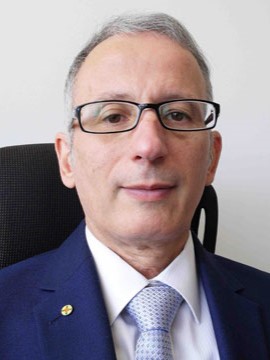
Eduardo de Souza Neto
Swansea University, United Kingdom
Eduardo De Souza Neto is a Civil Engineering professor at Swansea
University, where he has been a faculty
member since June 1999. He is based at the Zienkiewicz Centre for Computational Engineering. His research
focuses on
multi-scale modeling of solids, a rapidly growing field in applied and computational mechanics. Multi-scale
methods
allow the creation of new models that describe material behavior across different physical scales, often using
computational homogenization techniques based on Finite Element methods.
Prof. De Souza Neto's work has applications in the modeling of biological tissues, which have complex microstructures
leading to intricate macroscopic behavior. He has contributed to modeling the constitutive response of human arteries
and other materials, including polycrystalline metals and heat conduction problems. A significant area of his research
is the prediction of how macroscopic material properties are influenced by microstructural changes, using the
topological derivative concept. This could lead to new techniques for microstructural optimization.
The complexity of computational multi-scale techniques demands efficient optimization to solve practical problems. Prof.
De Souza Neto's group has developed methods that significantly reduce computation time.
His published work includes contributions to martensitic transformations, multiscale virtual power methods, and modeling
material failure at different scales. Notable publications include papers in Engineering Computations, Mechanics of
Materials, and the International Journal of Plasticity.
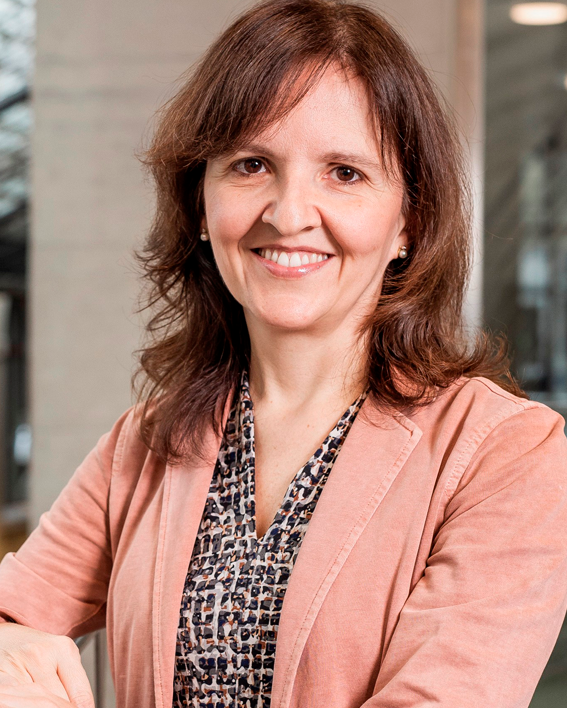
Laura De Lorenzis
ETH Zürich, Switzerland
Laura De Lorenzis received her Engineering degree and her PhD from the University of her hometown Lecce, in southern
Italy, where she first stayed as Assistant and later as Associate Professor of Solid and structural mechanics. In 2013
she moved to the TU Braunschweig, Germany, as Professor and Director of the Institute of Applied Mechanics. There she
was founding member and Chair (2017-2020) of the Center for Mechanics, Uncertainty and Simulation in Engineering.
Since
2020 she is Professor of Computational Mechanics at the ETH Zürich. She was visiting scholar in several renowned
institutions, including Chalmers University of Technology, the Hong Kong Polytechnic University, the Massachusetts
Institute of Technology (as Fulbright Fellow), the Leibniz University of Hannover (as Alexander von Humboldt Fellow),
the University of Texas at Austin and the University of Cape Town. She is the recipient of several prizes, including the
RILEM L’Hermite Medal 2011, the AIMETA Junior Prize 2011, the IIFC Young Investigator Award 2012, two best paper awards
and two student teaching prizes at the TU Braunschweig. In 2011 she was awarded a European Research Council Starting
Researcher Grant.
In 2022 she was elected Solid Mechanics Fellow of the European Mechanics Society (EUROMECH) "in
recognition of her outstanding and influential contributions to computational solid mechanics including in particular
phase-field approaches to fracture and fatigue, variational collocation methods, and data-driven mechanics".
She
authored or co-authored more than 130 papers on international journals, delivered over 15 plenary lectures at
international conferences and is editorial board member or associate editor of over 15 international journals. Since
2023 she is Editor of Computer Methods in Applied Mechanics and Engineering.
Javier Llorca
Universidad Politécnica de Madrid, Spain
Javier Llorca obtained his BEng/MSc in Civil Engineering with honors at the Technical University of Madrid in 1983
and his PhD in Materials Science at the same institution in 1986. He was appointed Associate Professor in the Department
of Materials Science of the Technical University of Madrid in 1987 and Professor in 1995 and, since 2006, he is the head
of the research group on “Advanced Structural Materials and Nanomaterials”. In 2007, he founded the IMDEA Materials
Institute and was his director until 2017, when he became the Scientific Director.
Prof. Llorca, a Fulbright scholar, is a Fellow of the European Mechanics Society and of the Materials Research Society
and a member of the Academia Europaea. He has held visiting positions Brown University, Shanghai Jiao Tong University,
Indian Institute of Science, China Central South University and Yanshan University. Owing to his scientific
contributions, he has received numerous awards, including the Leonardo Torres Quevedo National Research Award in
Engineering, the Morris Cohen Award from TMS, the Magnesium Science & Technology Award from the International Magnesium
Society, the Research Award from the Spanish Royal Academy of Sciences, the Distinguished Scientist Award from the
Structural Materials Division of TMS, the Miguel Catalán Award from the Comunidad de Madrid, the Research award from the
Technical University of Madrid and Career Award from the Spanish Society of Materials (SOCIEMAT).
Prof. Llorca is currently Executive Editor of Modelling and Simulation in Materials Science and Engineering and editor
of Materials Research Letters. In addition, he is Associate Editor of Composites Science and Technology, Materials
Science and Engineering A, Journal of Mg and Alloys, International Journal of Multiscale Computational Engineering,
Integrating Materials and Manufacturing Innovation, International Journal of Engineering Sciences, Advanced Theory and
Simulation and Multiscale Science and Engineering.
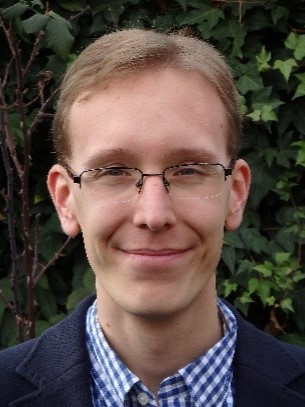
Gabriel Barbat
CIMNE / UPC BarcelonaTech, Spain
Gabriel Barbat is a Civil Engineer and researcher at the International Centre for
Numerical Methods in Engineering
(CIMNE) and Associate professor at the Technical University of Catalonia (UPC). His
current research lines are the
numerical modeling of quasi-brittle cracking, strain localization, computational solid
mechanics with enhanced accuracy,
mixed finite elements and nonlinear constitutive laws for monotonic and cyclic
situations.
The applications of his
research include the study of the behavior of masonry buildings, of fracture in concrete
members and structures and of
structural size effect. He also works in the finite element simulation of
thermo-mechanical problems and industrial
manufacturing processes, including highly nonlinear analyses in the incompressible
limit.
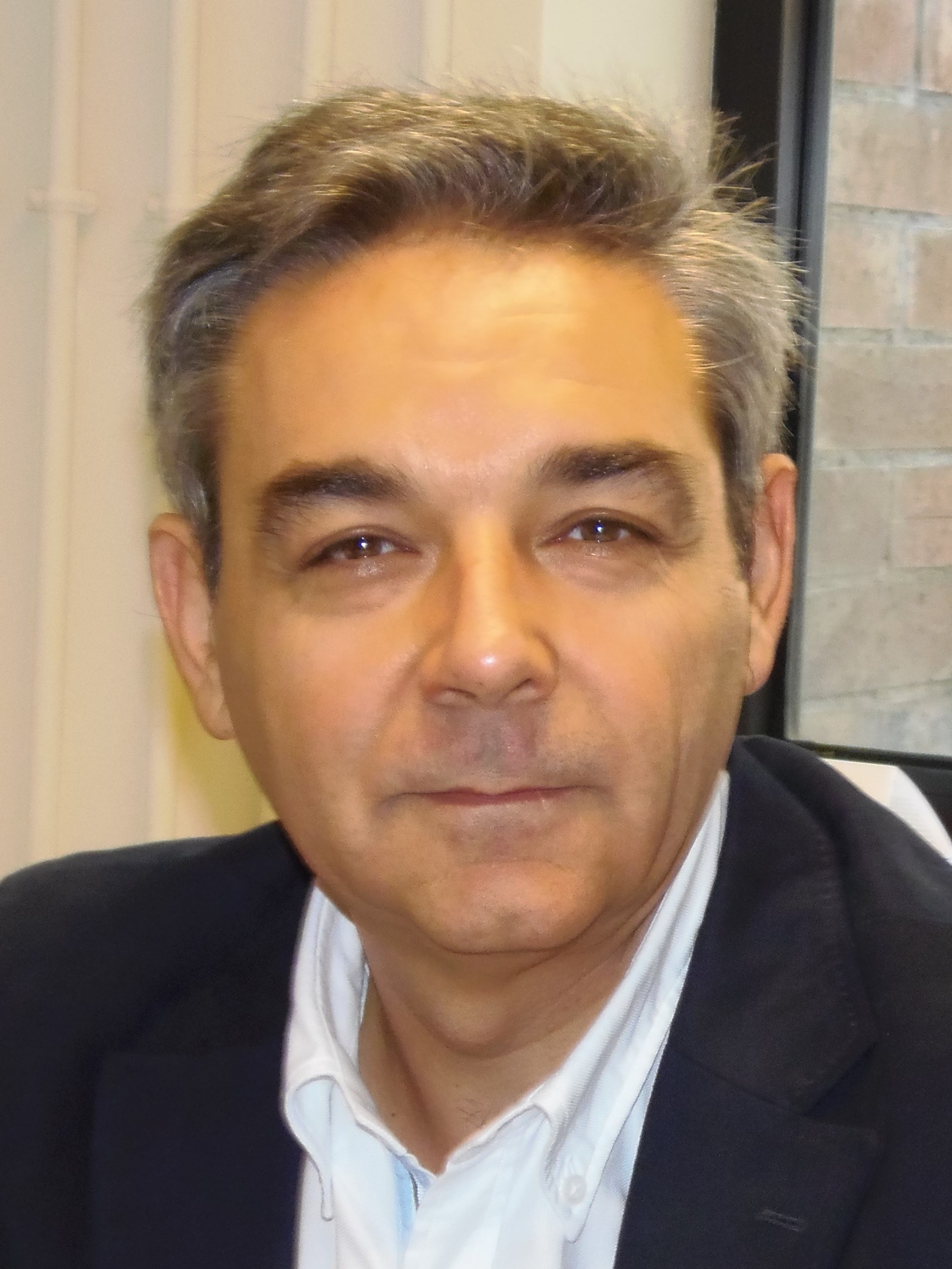
Miguel Cervera
UPC / CIMNE, Spain
Miguel Cervera is Doctor of Philosophy in Civil Engineering & Dr. Ingeniero de Caminos, Canales y Puertos. He is Professor of Continuum Mechanics and Structural Analysis and Head of Doctoral Studies at the School of Civil Engineering of Barcelona (UPC). He has received the "IACM Fellows Award", from the International Association for Computational Mechanics (2016). He has published 14 textbooks in Mechanics and Strength of Materials and Structural Mechanics, 150 research papers in JCR scientific journals and 180 communications in International Conferences in computational mechanics. He has participated in many financed research projects in Computer Aided Engineering, regarding Additive Manufacturing, Metal Deposition, Welding and Casting.
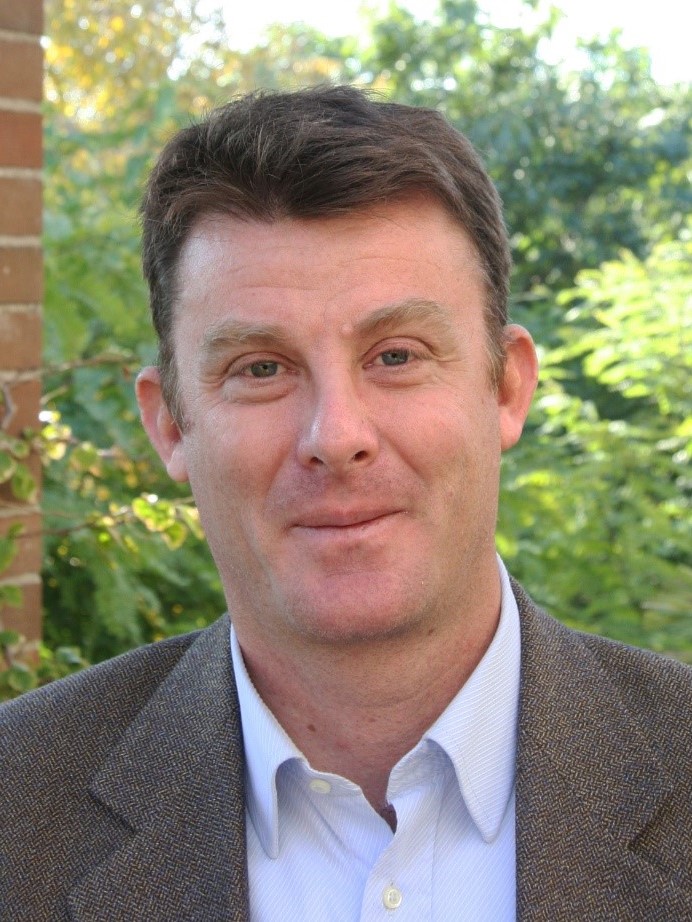
Michele Chiumenti
UPC / CIMNE, Spain
Michele Chiumenti holds a degree in Civil Engineering and a Master's in Structural
Analysis from Politecnico di
Milano (1994). He earned his Ph.D. in Civil Engineering (Ingeniero de Caminos, Canales y
Puertos) from the Universitat
Politècnica de Catalunya (UPC) in 1999. Currently, Prof. Chiumenti serves as a Full
Professor of Continuum Mechanics and
Structural Analysis at the Department of Civil and Environmental Engineering, UPC, and
as a Full Research Professor at
the International Center for Numerical Methods in Engineering (CIMNE), within the
Industrial Manufacturing Processes
group.
Chiumenti has an extensive publication record, with 130 peer-reviewed articles in JCR scientific journals
(h-index: 39, Scopus), along with 15 monographs, and contributions to four books and book chapters in the field of
non-linear computational mechanics. He has participated in over 100 national and international research conferences,
delivering nine plenary lectures. Additionally, he is the organizer and co-chairman of the renowned COMPLAS Conference
series and serves on the Scientific and Organizing Committees of several other conferences. He is a member of the
Spanish Society for Numerical Methods in Engineering (SEMNI) since 1999.
Prof. Chiumenti has led numerous European and Spanish-funded research projects, focusing on the development of finite
element (FE)-based technologies for numerical simulation in structural and failure analysis, spanning civil and
mechanical engineering. His work also encompasses thermo-mechanical analyses in advanced manufacturing processes such as
Additive Manufacturing (AM), Friction Stir Welding (FSW), casting, and other metal-forming techniques.

Narges Dialami
UPC / CIMNE, Spain
Dr. Narges Dialami is a tenured Associate Professor at the Technical University of Catalonia (UPC) and a researcher at CIMNE. She specializes in computational modeling of coupled thermomechanical problems for manufacturing process simulations.
She is a co-author of advanced computational models for the simulation of Friction Stir Welding (FSW), widely adopted by international companies and research centers for the design and virtual analysis of welded structures. Her current research focuses on Additive Manufacturing and Friction Stir Welding, with emphasis on next-generation simulation approaches such as digital twins, reduced-order modeling, and machine-learning-assisted methods.
She actively contributes to the international scientific community through conference presentations and service as a conference chair, organizer, and member of editorial and scientific boards. She has led and participated in several competitive and industrial research projects, and her work has been recognized with distinctions and fellowships. She also serves as an expert evaluator for competitive research projects.
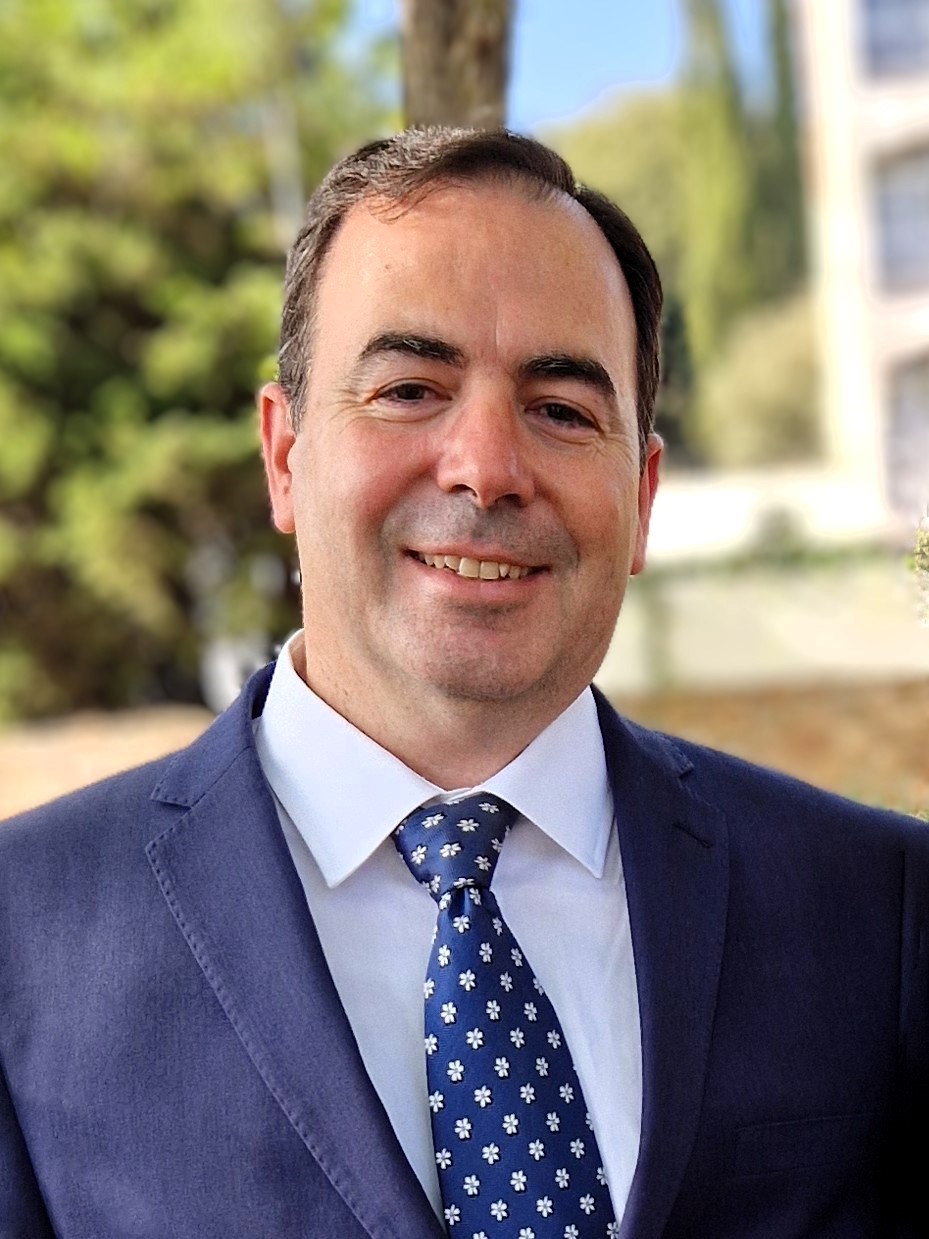
Fernando Rastellini
CIMNE, Spain
Fernando Rastellini, a Civil Construction Engineer (UNNE, Argentina, 2000),
earned his PhD in Structural
Analysis from the Polytechnic University of Catalonia (UPC) in 2006. Between 2008 and
2018, he was the Technical
Director responsible for developing Stampack, specialised software for metal forming
processes, at Quantech ATZ, S.A.
His expertise lies in dynamic structural analysis using finite element methods, focusing
on metal forming and assessing
strength and damage in reinforced concrete and composite structures. Currently a senior
researcher at CIMNE in
Barcelona, Dr Rastellini also teaches at UPC and has authored 20 scientific articles.
His contributions have been
recognised with awards for academic excellence in engineering.
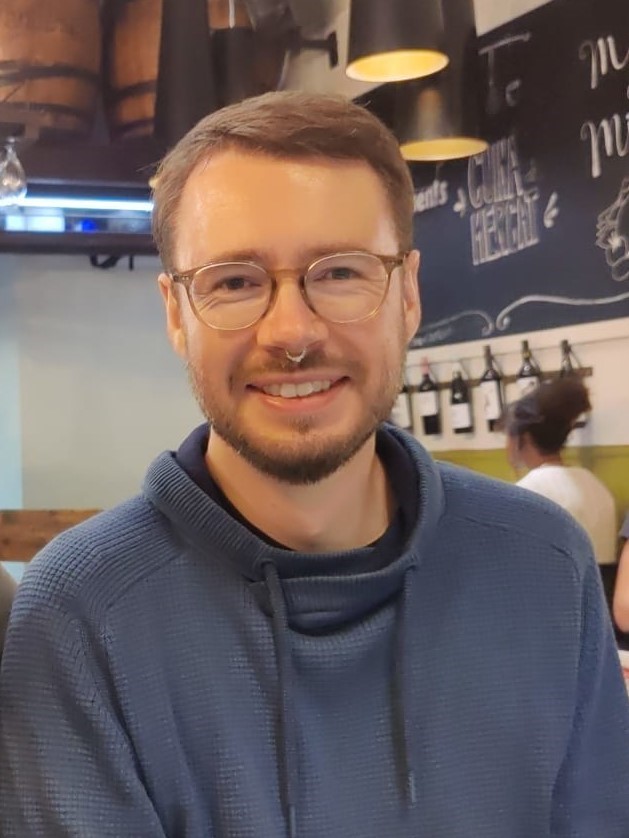
Henning Venghaus
UPC / CIMNE, Spain
Henning Venghaus is a researcher at the Polytechnic University of Catalonia (UPC) and
works as a researcher at the
International Center for Numerical Methods in Engineering (CIMNE) in Barcelona, Spain.
He grew up in northeastern
Germany close to the Baltic Sea and studied mechanical engineering with a focus on
structural mechanics and numerical
methods at the Otto von Guericke University (OVGU) in Magdeburg.
His research focuses on advanced Finite Element technologies, particularly mixed
formulations, adaptive refinement
strategies and embedded domain methods, and on facilitating technology transfer between
academic institutions and
industry partners. His doctoral thesis aims to apply newly developed numerical methods
to industrial manufacturing
processes, particularly Friction Stir Welding.

complas_sec@cimne.upc.edu/ Telf. + 34 - 93 405 46 94
Copyright © 2027 CIMNE, All Rights Reserved. Terms of service